
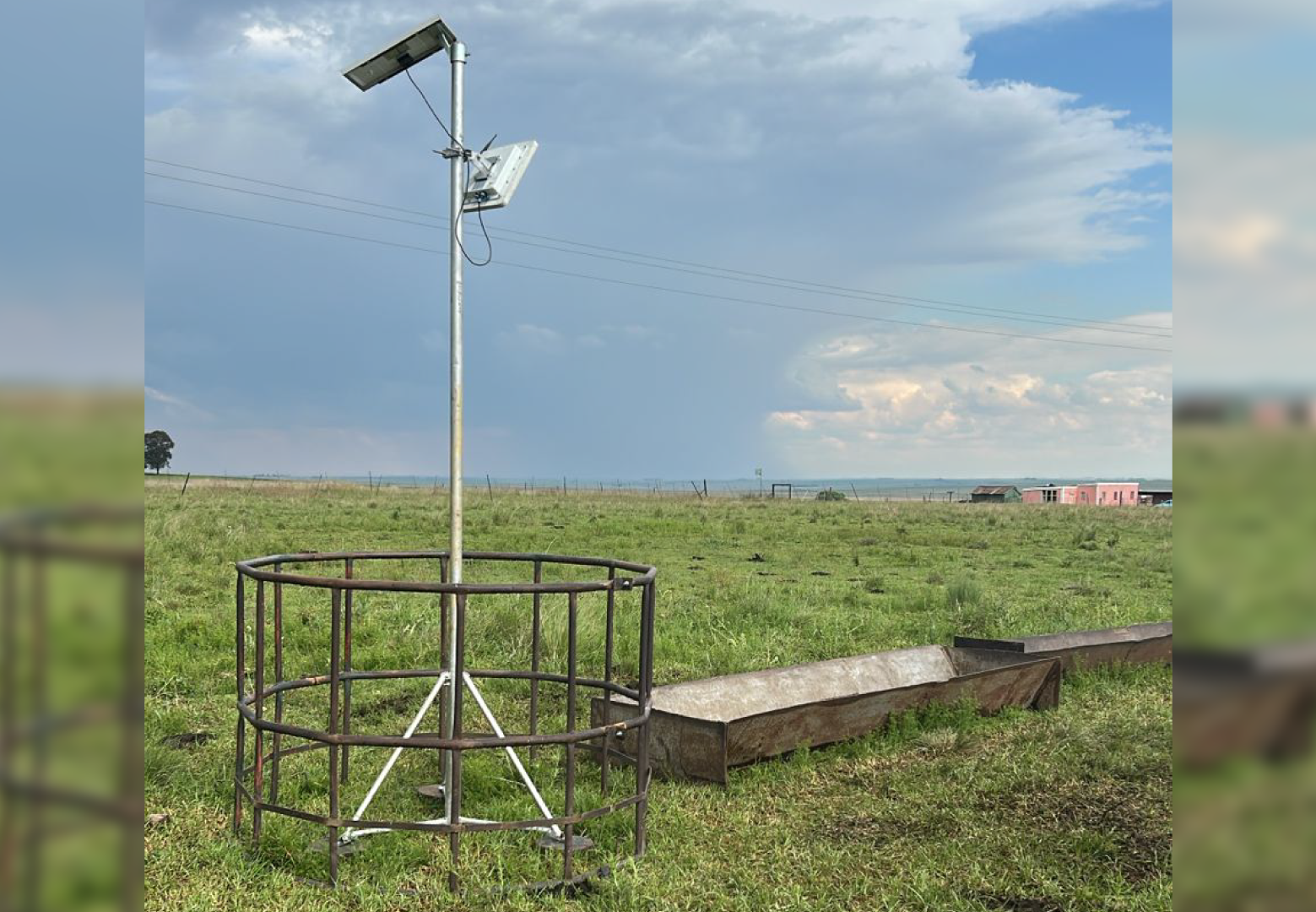
A farmer explains how HerdTrack works on his farm
SP Smith farms with Bovelder cattle in the Bethal district of Mpumalanga. After searching a long time for a management system that’s accurate, he finally found HerdTrack. What convinced him was how practical the system is for the realities of a South African farm.
What made you decide to try HerdTrack for the first time?
One of the biggest drivers behind his interest was the need for better visibility over his herd. He had been using geofencing, but that only offers partial monitoring because only a few animals wear collars.
“I don’t want something that’s 90% accurate. I want 100%,” he says. “HerdTrack can tell me in real time that 99 animals are at the water trough – then I know one of the 100 is missing and I can respond immediately.”
For him, the value of RFID technology is unavoidable in the future. The fact that HerdTrack’s tags look like normal ear tags but can be read by the scanner up to 10 metres away, was a major advantage. He also uses the system to programme alerts for specific animals.
How did you experience the setup and initial use?
“Easy,” he says. “You just set it up, bolt it down, and off you go.”
The system can also be moved without any hassle – “one person can do it, no help needed.”
SP explains that in the beginning there were a few days where the system didn’t count 100% accurately, but the issue was quickly resolved. “I contacted the HerdTrack team and they helped. The setup is very important… The scanner must be close to a spot where all your animals naturally gather, like a water point. Then it counts 100% accurately.”
HerdTrack’s ultra-high-frequency RFID ear tags can be picked up within a radius of up to 10 metres. The reason it doesn’t read further is because the tags don’t contain batteries; they’re powered by the solar panel at the scanner. That makes the system cost-effective without sacrificing accuracy – a major advantage for farmers who must run the numbers every day.
How do you use HerdTrack in your day-to-day farming?
In his daily management, HerdTrack helps him react quickly, accurately, and with purpose when something is wrong. The system doesn’t replace boots on the ground, he explains – it simply makes those boots smarter. “It helps you respond directly to where the issue is.”
His biggest value point? “The system is 100% accurate when it’s set up correctly. If a cow comes to drink water, you know she’s there. It doesn’t miss a tag.”
SP also recalls a time when his herd was grazing on leased land where the HerdTrack system was installed. When the animals had to be moved across the road for two days due to a water issue (into a paddock without the system) ten cows were stolen.
HerdTrack isn’t a security system, but SP’s experience highlights something important: visibility discourages people who want to work in the dark. The system’s ability to count animals constantly and show movement data immediately brings a level of peace of mind that feels like security, even though it’s not what the system is designed for.
What would you tell a farmer who is still unsure whether HerdTrack is worth it?
“With foot-and-mouth disease, positive identification is becoming more important. If you can show where an animal moved and when, that’s extremely valuable.”
SP explains how useful it is when loading animals for the feedlot: he can instantly show an animal’s full history – grazing, vet records, movement. Some feedlots are even willing to pay for the RFID ear tags on your cattle. And even if they don’t, HerdTrack tags are reusable: “You just cut the tag, get a new pin, and use it again.”
He also emphasises: “The HerdTrack team is always willing to help. They’re open to suggestions and they act on them.”
SP Smith’s story confirms what many farmers already know: in modern livestock farming, you can’t manage what you can’t see. With HerdTrack, he’s found a system that makes his herd visible, his decisions quicker, and his responses more precise.
~ Compiled by René van der Vyver